Bring the numbers together.
Review supported revenue, order, guest, and operating trends.


Make the next menu or service decision with a clearer picture. Bring sales, order trends, and menu performance into one view.
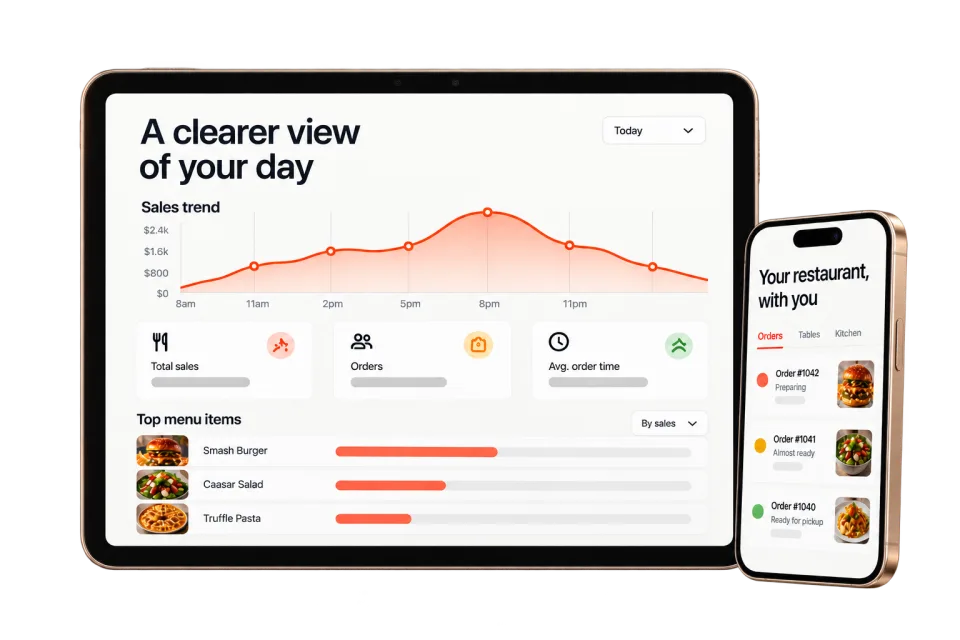
A week of activity becomes more useful when you can open a day and see what is behind it.
Pickup accounts for 63% of Friday’s orders.
Revenue definitions and source freshness depend on your setup. Forecasting is available on Pro; forecasts are planning estimates.
Review supported revenue, order, guest, and operating trends.
Use forecasts and confidence context as planning estimates.
Investigate anomalies, menu performance, and guest cohorts.
Pro adds forecasting, cost analysis, and menu engineering. Forecasts help planning; they are estimates.
Compare plansHow to read the trends, understand the limits, and use the numbers in your next decision.
Restaurant analytics brings supported sales, order trends, and menu performance into one view. It helps operators spot changes and ask better questions before making the next menu or service decision.
No. Forecasts are planning estimates based on available data and assumptions; actual demand and operating conditions can differ.
Use it to spot changes, form questions, and investigate context. Important decisions should also consider source data quality and what was happening in the restaurant.
Refresh timing can differ by source and connection. The dashboard should make recency understandable, and operators should verify delayed or incomplete data before acting.
Confirm which data and definitions are available for export, the supported formats, date limits, permissions, and whether a report can be reproduced outside the dashboard.
Start with what would make your day easier. We’ll take it from there.
Let’s talk about your restaurant